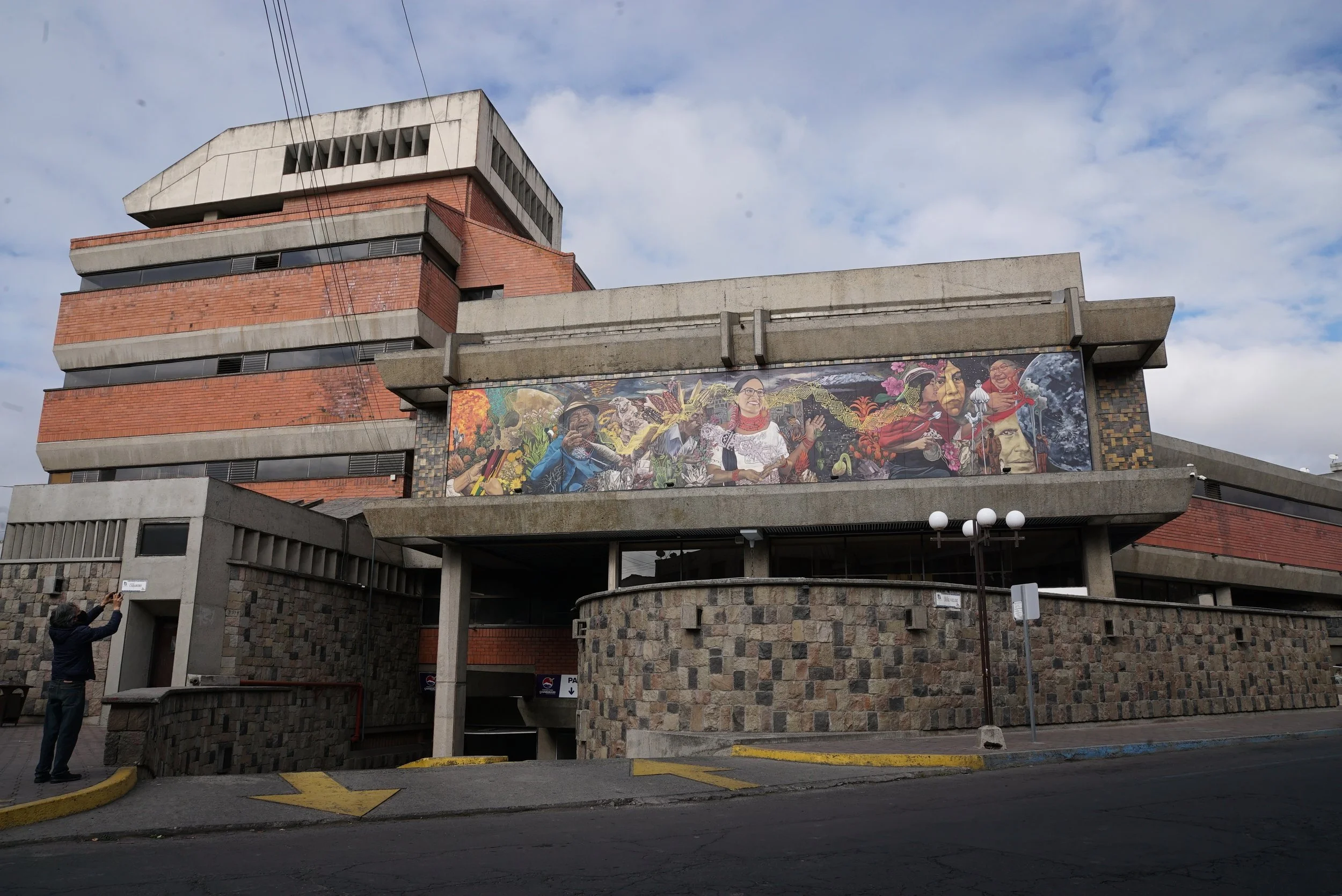
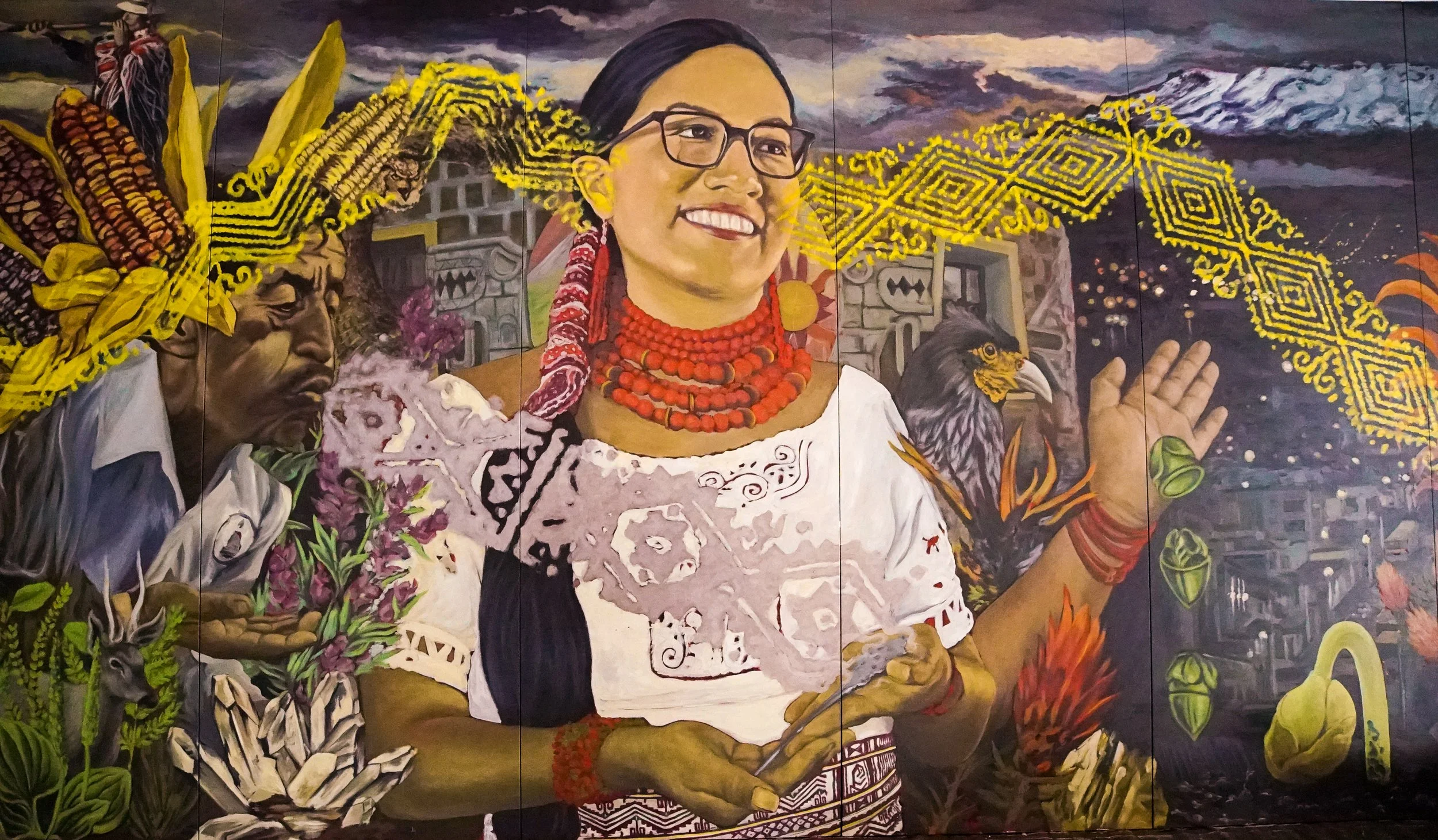
Decir Haciendo, 2021, Acrylic on wood panel, 10 ft x 45 ft.
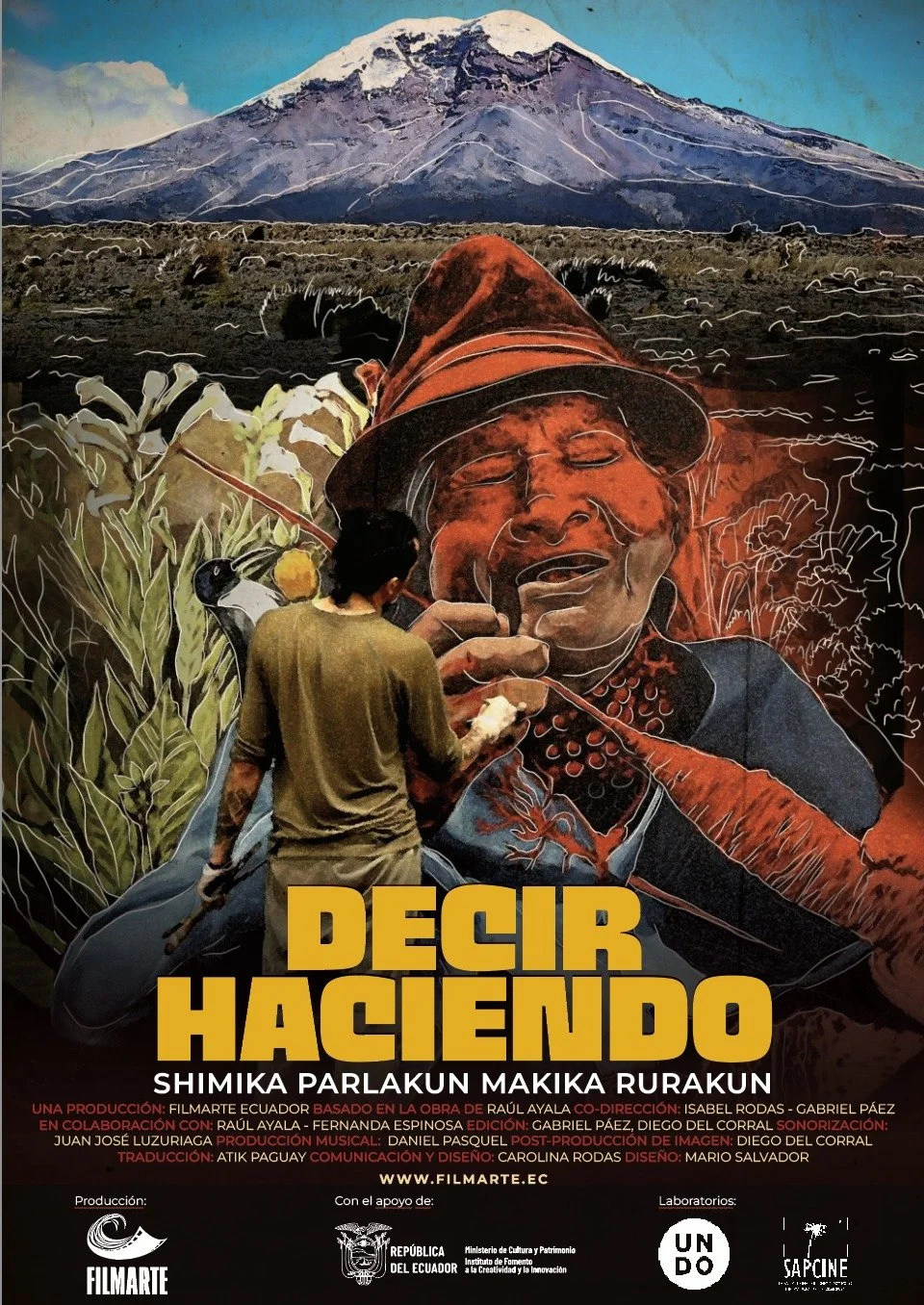
This mural project was done in collaboration with Ecuadorian filmmakers Gabriel Paez, Isabel Rodas, and Oral Historian Fernanda Espinosa for the Museum of the City of Riobamba, located in the Ecuadorian Central Andes. It is an ongoing reflection on the power of representation, Language Justice, and intergenerational connections. The project has evolved into a documentary currently in post-production, scheduled for release in 2026.
This outdoor historical painting, installed on the walls of the Riobamba City Museum, is housed in a City Government Building recognized as a site of modern architectural heritage. The work invites reflection on language and identity, exploring both what we inherit and the silences within official histories. It emphasizes the activation of public spaces through a shared cultural fabric.
The work unfolds across seven scenes: four dedicated to the Raymis, seasonal celebrations rooted in the solar calendar, interwoven with three portraits of women from different generations of the Cacha community in Chimborazo Province. These portraits are linked by the intricate designs of Puruwá belts, which serve as vessels for transmitting knowledge and as symbols of linguistic and cultural continuity. Maria Rosa Ashqui Janeta, a traditional weaver from the Cacha Huajshi community with whom I still collaborate in other projects, introduced us to her family. Vicenta Morocho Lema and Jakelin Aulla Cayambe, a grandmother and granddaughter, are portrayed as a symbol of intergenerational connection. By weaving together these elements, the painting bridges personal and collective histories, activating the architectural and cultural significance of the space it inhabits.
The painting also features Taita Yachak Pedro Lema, from the San Jacinto de Cuyuctus community in Colta, Chimborazo, surrounded by the flora, fauna, and minerals of the páramo. The Yachak blows tobacco smoke to bless a tupo, a traditional women's brooch used by the Cacha people of the Puruwá Nation. This section of the mural is also dedicated to maize and depicts a bocinero, symbolizing the strength of communal solidarity in historical uprisings.
At the center of the mural is Carmen Tiupul, Vice President of COMICH, the Confederation of the Indigenous Movement of Chimborazo. She is portrayed standing before the Pucará Tambo Cultural Center of Cacha, holding the tupo. With her other hand, she plants a seed, a metaphor for nurturing knowledge in future generations.
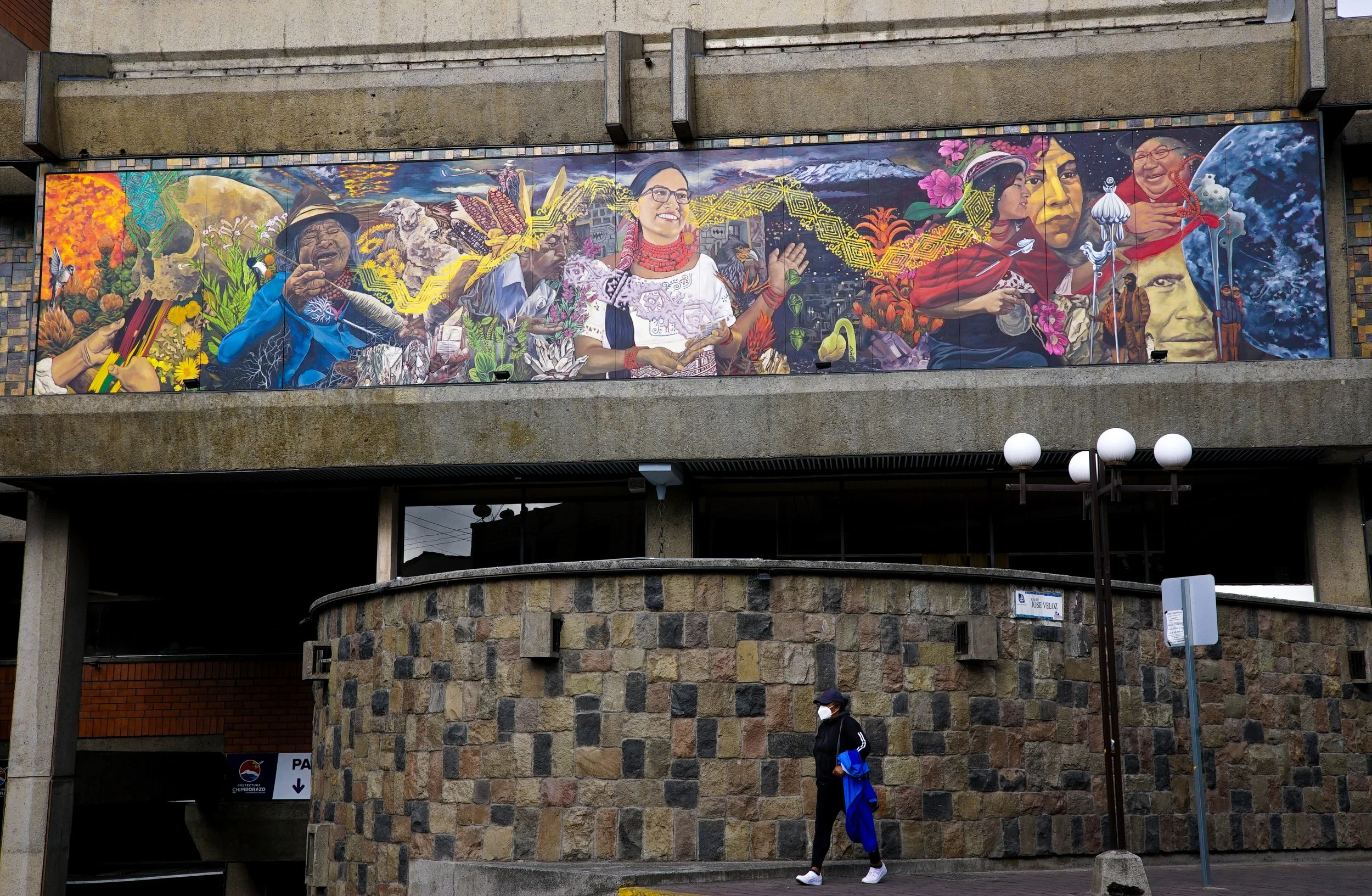
Decir Haciendo. Click image for more info
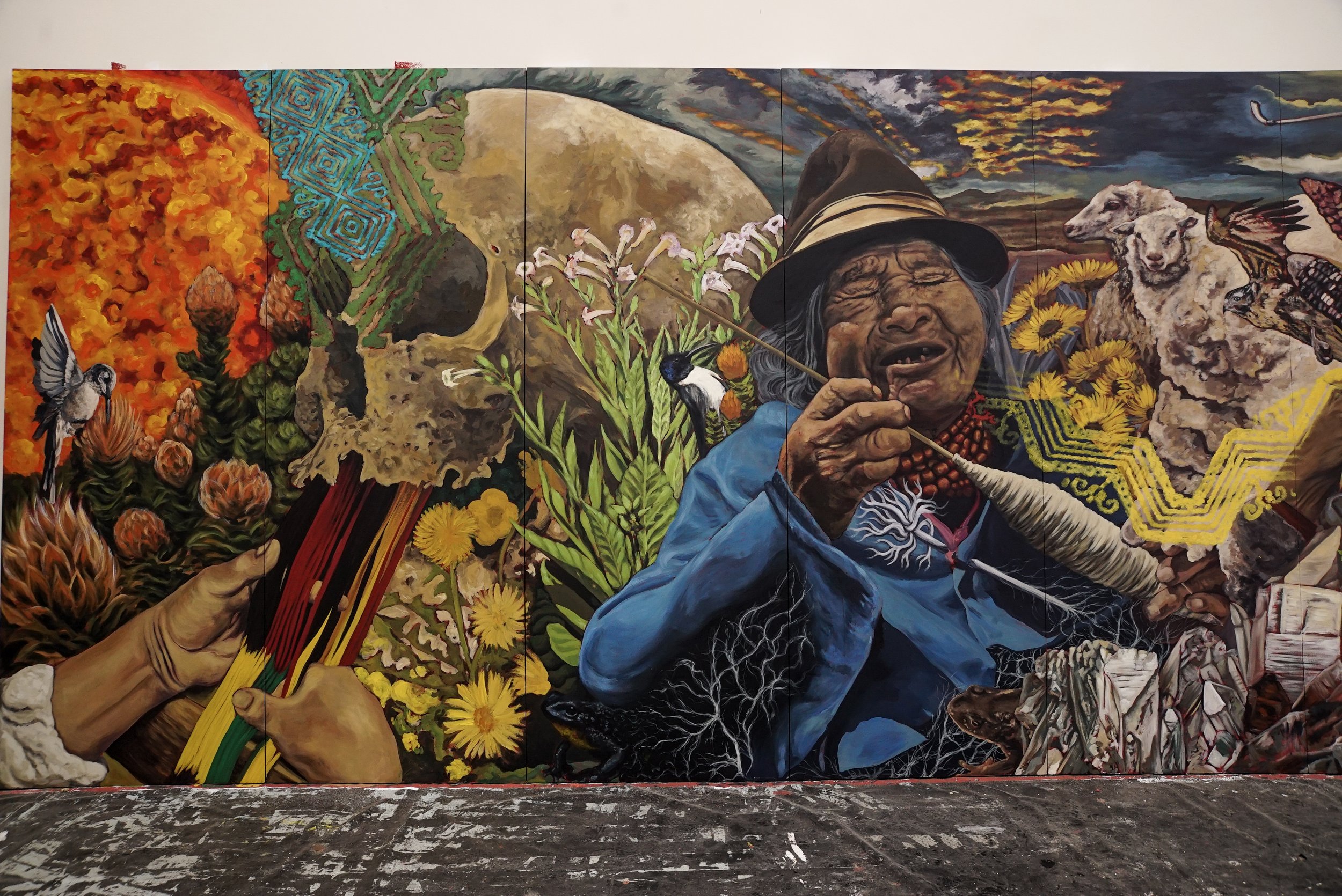
Decir Haceindo (detail)
Decir Haciendo (detail)

Decir Haciendo (detail)